
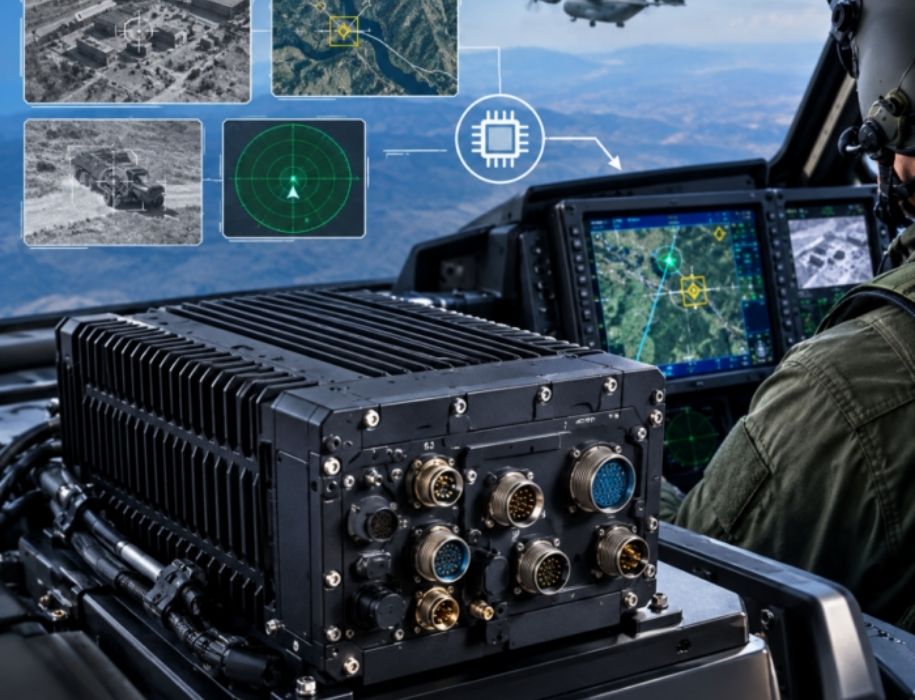
An airborne mission computer is a specialised computing system installed on an aircraft to process information, manage mission-related functions and coordinate data from sensors, navigation equipment, communications systems and other avionics. Unlike a standard flight computer focused on core aircraft control, a mission computer supports the operational tasks an aircraft performs. These can include surveillance, reconnaissance, navigation, sensor management, communications and mission planning. Modern airborne computers can also process radar, infrared, video and other sensor data in real time, helping crews receive and interpret information during a flight. UK military avionics guidance identifies data processing, sensor information and mission-specific data as important airborne computing functions.
How does an airborne mission computer work?
An airborne mission computer receives data from multiple aircraft systems and processes that information according to its software and mission configuration. Inputs can come from navigation systems, radar, electro-optical or infrared sensors, communications equipment, digital maps and other avionics.
The computer then processes, combines or distributes the information to the systems and displays that need it. For example, a surveillance aircraft may collect sensor data, process imagery and present relevant information to a crew workstation. A mission computer can therefore act as a central processing and coordination element within a larger mission system.
The exact architecture varies by aircraft. Some systems use dedicated computers for individual functions, while newer architectures can combine several capabilities through modular hardware and software. The UK Ministry of Defence’s PYRAMID programme focuses on open systems architecture and software reuse to make air mission systems more adaptable as requirements change.
What does an airborne mission computer do?
The role depends on the aircraft and its mission. Typical functions include mission planning, navigation support, sensor management, data processing, communications management and information display.
Military aircraft may use mission computers to coordinate surveillance sensors, electronic systems, weapons interfaces and mission displays. BAE Systems describes mission avionics capabilities that include mission computers, display processors, digital maps, payload and mission management, stores management and weapon controls.
A maritime patrol aircraft provides a useful example. Such an aircraft may need to combine radar information, optical imagery, navigation data, communications and other mission information. The mission computer processes this information and helps the crew manage different operational tasks from a common computing environment.
What is the difference between a flight computer and a mission computer?
A flight computer and a mission computer can perform different roles within an aircraft’s avionics architecture.
Flight computers generally support functions associated with operating and controlling the aircraft. Depending on the aircraft, these functions can include flight guidance, flight control and other systems required for aircraft operation.
A mission computer focuses on the operational purpose of the aircraft. This may include surveillance, reconnaissance, sensor processing, mission management, communications and other mission-specific functions.
The two types of computing systems can interact closely. A modern aircraft may contain multiple interconnected computers rather than relying on one processor for every function. This separation can help organise software, hardware and safety requirements according to their specific roles.
What technologies are used in airborne mission computers?
Airborne mission computers require specialised hardware and software because aircraft operate under demanding environmental and operational conditions. Size, weight, power consumption, thermal management, processing performance and reliability all influence system design.
Modern systems may use ruggedised processors, high-speed data interfaces, graphics processing, real-time video processing and modular input/output architectures. B2KH supports airborne mission computing applications involving capabilities such as real-time video processing, mission data recording, health monitoring and sensor fusion.
Software architecture also matters. Open architecture approaches can make it easier to integrate new applications, sensors or processing capabilities without redesigning an entire aircraft system. This approach has become increasingly relevant as aircraft missions and digital systems evolve.
Why are airborne mission computers important?
An airborne mission computer helps an aircraft manage large amounts of information while a mission is underway. Sensors can produce substantial quantities of data, and crews need relevant information presented in a form that supports timely decisions.
The computer can also reduce the need for separate processing equipment for every mission function. Depending on the aircraft architecture, one computing platform may support several applications and interfaces.
Modern connectivity also creates additional engineering requirements. UK military airworthiness guidance notes that increasing interconnection between avionics and other systems creates potential cyber security and airworthiness risks. Airborne electronic hardware and software therefore need appropriate security and assurance measures as part of system design.
Where are airborne mission computers used?
Airborne mission computers are used across different types of aircraft where specialised computing and information management are required. Applications can include military fixed-wing aircraft, helicopters, maritime patrol aircraft, surveillance platforms and unmanned aerial vehicles.
Their capabilities depend on the aircraft’s mission. A surveillance platform may prioritise sensor fusion and imagery processing, while another aircraft may require mission planning, navigation, communications or stores management capabilities.
This flexibility allows mission computers to support both existing aircraft upgrades and new aircraft programmes. Their design must match the aircraft’s available power, space, cooling, interfaces, software architecture and certification requirements.
What should be considered when selecting an airborne mission computer?
Engineers typically consider processing performance, size, weight, power consumption, cooling, input and output interfaces, software compatibility, environmental requirements and certification needs.
Reliability is also essential because an airborne computer must continue operating within the conditions specified for its aircraft application. Standards and assurance processes can apply to both airborne software and hardware. Commercial mission computers may also be designed around established aviation development standards and environmental requirements, depending on their intended certification level.
For newer aircraft programmes, engineers may also assess open architecture, upgradeability, cybersecurity and long-term support. These factors can affect how easily a mission system adapts to new sensors, software applications and operational requirements.
Frequently Asked Questions
Is an airborne mission computer the same as a navigation computer?
No. A navigation computer primarily supports navigation-related functions, while a mission computer can manage a wider range of operational tasks. Depending on the aircraft architecture, the mission computer may receive navigation information and combine it with sensor, communications and mission data.
Can airborne mission computers process video?
Yes. Some airborne mission computers include real-time video and image processing capabilities. These capabilities can support applications involving electro-optical sensors, infrared systems and other imaging equipment.
Are mission computers used on unmanned aircraft?
Yes. Mission computers can be installed on unmanned aerial vehicles as well as fixed-wing and rotary-wing aircraft. Their functions depend on the aircraft design and the mission equipment connected to the computer.
Why do airborne mission computers need rugged hardware?
Aircraft experience vibration, temperature changes, electrical constraints and other environmental conditions that ordinary commercial computers may not be designed to withstand. Airborne computing hardware therefore needs to meet the environmental and reliability requirements of its intended platform.
How are airborne mission computers evolving?
Airborne mission computers are increasingly designed around higher processing performance, modular architectures, software reuse, sensor integration and upgradeability. UK defence research and development programmes such as PYRAMID reflect the growing focus on adaptable and open avionics architectures.
An airborne mission computer provides the computing capability needed to process mission information and coordinate specialised aircraft systems. Its exact functions depend on the platform, but the core purpose remains the same: processing and managing information required for the aircraft’s operational mission. Understanding What is an airborne mission computer? therefore starts with recognising its role as a specialised part of the aircraft’s wider avionics and mission system architecture.